

Shopify store design trends in 2026

Updated at
19.11.2026
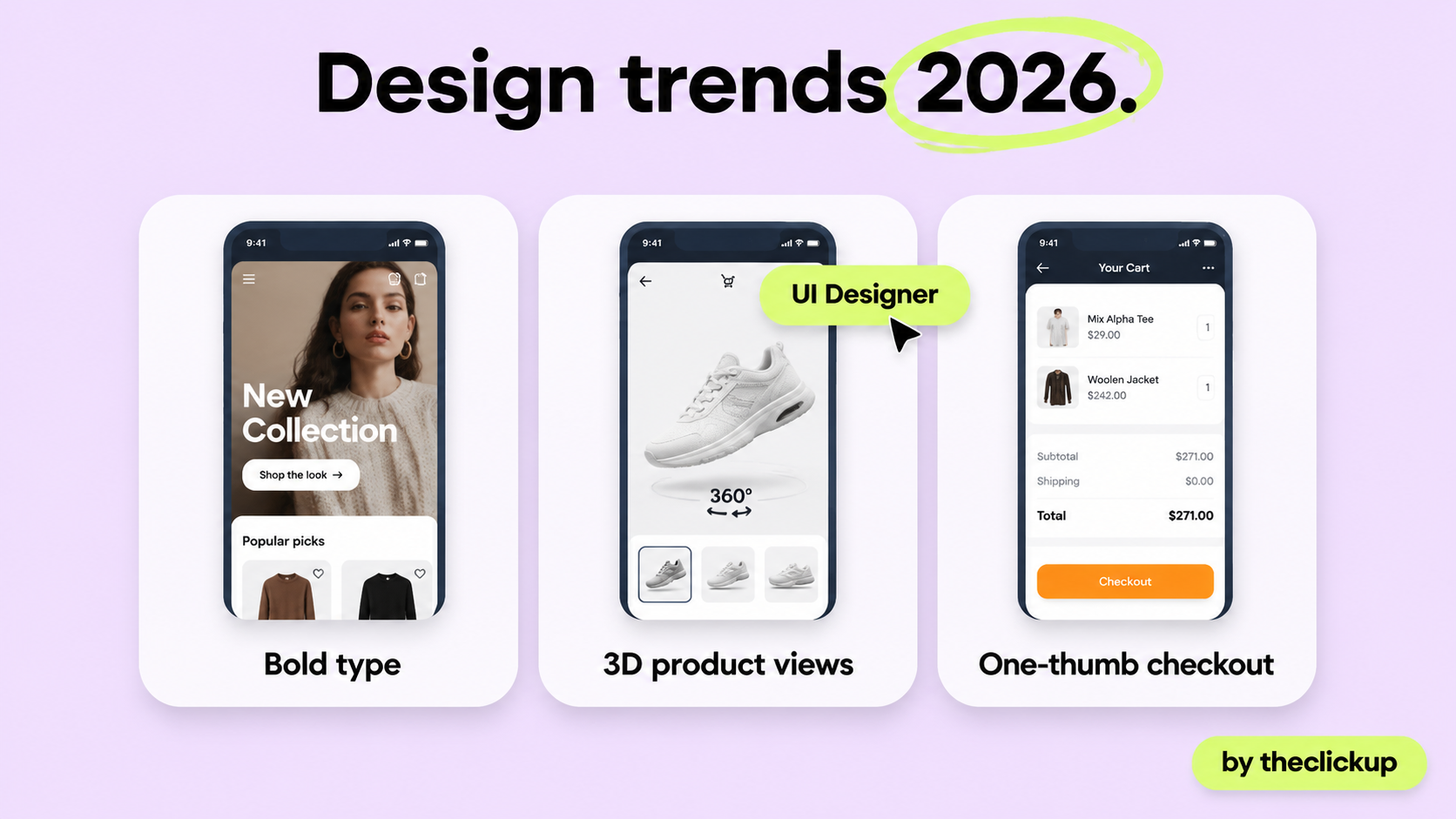
Trends are only useful when they sell. The ones below are the design moves US Shopify stores are actually making in 2026 — and what each one costs you if you copy it badly.
This guide covers the Shopify design trends that matter in 2026: product-first homepages, calmer checkouts, AI search answers, and the ones to skip — with the checks that tell you whether a trend fits your store.


Shopify store design in 2026: the short answer
The stores winning in 2026 look calmer, not busier. The homepage leads with the product and the proof, the checkout asks for less, and the search box answers instead of listing. The three moves that matter most are product-first pages, a shorter checkout, and content that AI search can quote. Everything else — motion, 3D, quizzes, bundles — is a garnish: worth it only when it fits what the buyer is doing.
The mistake is redesigning for the feed. A trend that looks good in a screenshot and slows the store, confuses the checkout, or hides the price is a trend that costs sales. The sections below separate the moves that sell from the ones that only photograph well.
The 2026 trends at a glance
| The trend | Why it matters | What it looks like in practice |
| Product-first homepage | The big shift | The bestseller and its proof lead the page — the brand story moves down |
| Calmer, shorter checkout | The money move | Fewer fields, guest checkout, the payment options buyers use shown first |
| AI search and answers | The new front door | Search that answers in plain words, and pages written so AI can quote them |
| Bigger imagery, fewer sections | The look | One strong product image instead of twelve sections nobody scrolls to |
| Accessibility as standard | The quiet one | Readable type, real contrast, keyboard-friendly — good for buyers and for search |
| Subscriptions and bundles | The repeat sale | Subscribe-and-save and bundles built into the product page, not bolted on |
The three trends worth copying
Copy these three first. They are the ones that show up in the numbers.
1. Product-first pages
The homepage of a good 2026 store reads like a product page: the bestseller up top, a real photo, a price, a review, and one clear action. The brand story, the values and the lookbook are still there — further down, for the buyers who want them. This works because most buyers arrive from an ad or a search with a product in mind, not with curiosity about the brand. If the first screen does not show what they came for, they leave. Our Shopify redesign checklist covers the same discipline for a full rebuild, and the best Shopify themes for fashion stores guide shows which themes do this well.
2. A checkout that asks for less
The checkout trend of 2026 is subtraction: fewer fields, fewer steps, guest checkout offered upfront, and the payment options buyers actually use shown first. A buyer who has decided to buy should reach the confirmation in as few moves as possible — every extra field is a place to leave. If the store runs on Shopify Plus, which starts from $2,300 a month as listed by Shopify, the checkout can be customised further; our Shopify Plus pricing guide covers what that costs. The same rule applies to the product page: one action, not four competing buttons.
3. Pages written for AI answers
Buyers increasingly ask ChatGPT or Perplexity instead of typing into Google, and the stores that get quoted are the ones whose pages answer in plain words: a short answer up top, clear headings, real prices, and FAQs that match the questions people actually ask. This is the same discipline as good SEO — our Shopify SEO checklist covers the technical half — but written for a machine that summarises, not just for a search page that lists. The product descriptions, the sizing notes and the shipping answers are the content that gets quoted.
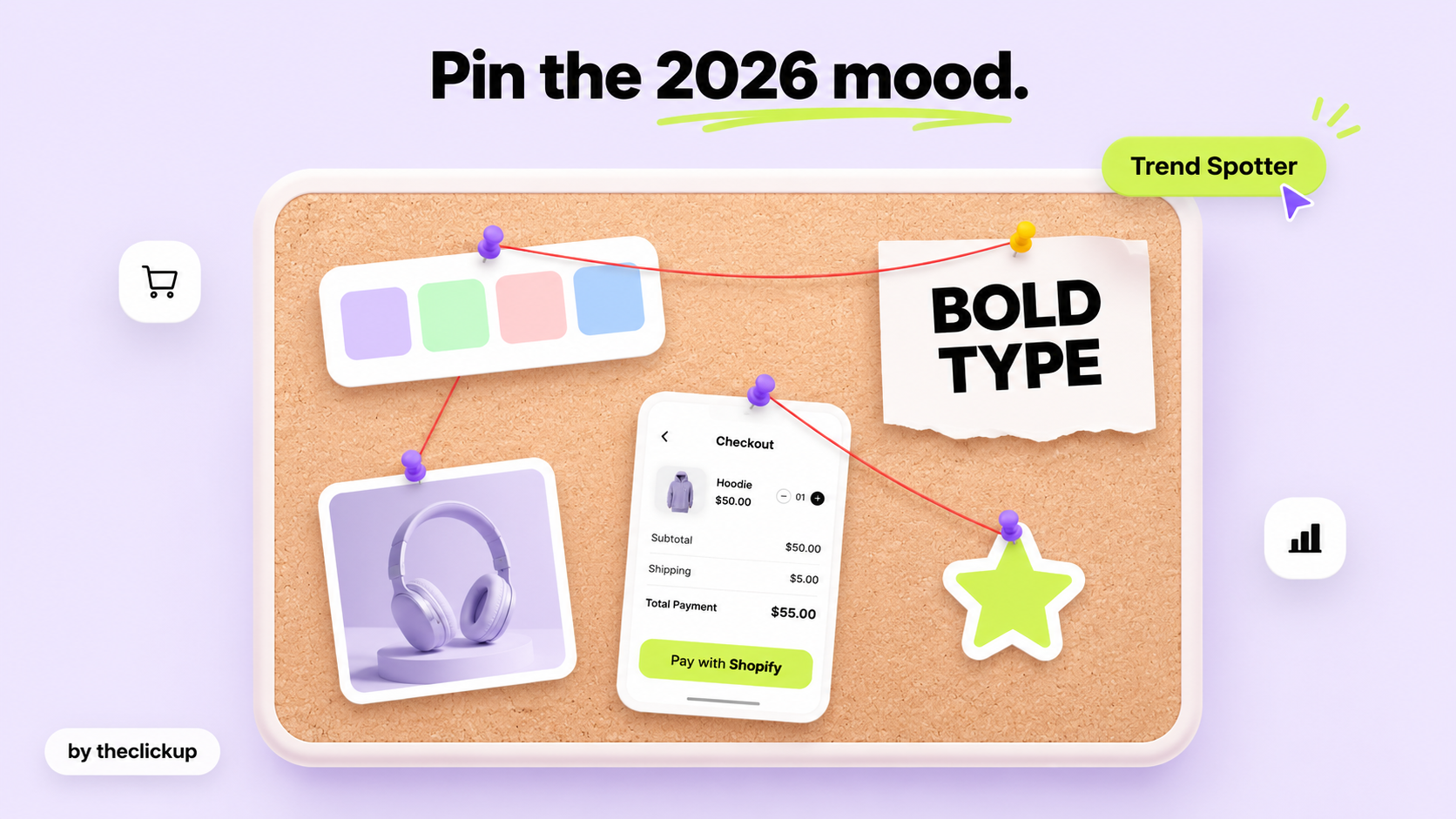
The trends to skip — or copy carefully
Not every trend deserves the budget. Heavy motion and 3D product views look impressive in a demo and slow the store on a real phone — and speed is still the first thing a buyer feels, as our speed optimisation guide shows. Quizzes and guided selling can help a store with a complicated catalogue and hurt a store with five products: if the buyer already knows what they want, a quiz is a wall. And personalisation that shows the wrong product is worse than no personalisation at all — it tells the buyer the store does not know them.
The test for any trend is simple: does it help the buyer decide faster, or does it help the store look modern? If it only does the second, skip it. A trend that survives that test is usually the boring one — clearer photos, shorter copy, a faster page — and those are the ones that pay.
How to adopt a trend without breaking the store
A trend is a change, and a change is a risk. Adopt it like this:
- Change one thing at a time: a new homepage and a new checkout in the same week means you will never know which one moved the numbers. One change, one measurement.
- Test on a real phone, on mobile data: that is how most buyers arrive. A design that is fast on office wifi and slow on a phone is a slow design.
- Keep the old version for a week: run the new page alongside the old one, or at least keep the old theme saved. If the numbers fall, you can go back in an hour.
- Watch the checkout, not the homepage: a trend succeeds when more people finish buying, not when more people look. Conversion and checkout completion are the numbers that matter.
- Ask the buyers, not the feed: five real buyers using the new page will tell you more than a hundred screenshots of other stores. The store and the ads around it should come from one team — see our Shopify service and our Meta Ads service.
Trends come and go; the store that keeps selling is the one that tests every trend against the buyer, not against the moment.
Redesigning this year? Check the trend against section 4 first — or ask us to audit the store before you spend.
The verdict: copy the trend that fits the buyer, not the trend that fits the feed
Product-first pages, a shorter checkout, and content that AI can quote — those are the 2026 trends worth the budget, because they help a buyer decide faster. The rest is decoration: copy it only when it fits the store, and test it on a phone before it goes live.
Start this month: lead the homepage with the bestseller, cut one field from the checkout, and rewrite the top three product descriptions so they answer in plain words. Measure the checkout before and after — the difference is the argument for the next trend.
FAQ
What are the biggest Shopify design trends in 2026?
Product-first homepages, calmer and shorter checkouts, and pages written so AI search can quote them. Bigger imagery with fewer sections, accessibility as standard, and subscriptions built into the product page round out the list.
Should I redesign my Shopify store for the 2026 trends?
Only if the trend helps your buyers decide faster. Lead with the bestseller, shorten the checkout, and rewrite key pages for AI answers — those three pay. Redesigning for looks alone usually costs sales.
Do 3D product views and motion slow down a Shopify store?
They can. Heavy motion and 3D look impressive in a demo and often load slowly on a real phone, and speed is the first thing a buyer feels. Test any motion-heavy design on mobile data before it goes live.
What is a product-first Shopify homepage?
A homepage that leads with the bestseller — a real photo, a price, a review, and one clear action — instead of leading with the brand story. Most buyers arrive from an ad or a search with a product in mind.
Read more

 advantage

 Book a call

Fill out the form
or brief with questions



 LinkedIn
 Instagram
Welcome to The ClickUp privacy notice.
The ClickUp respects your privacy and is committed to protecting your personal data. This privacy notice will inform you as to how we look after your personal data when you visit our website (regardless of where you visit it from) and other sites we own and operate. And tell you about your privacy rights and how the law protects you.
We may change the privacy policy from time to time to reflect changes to the products and services that we provide and how we process your personal data.
We will not share your information with any third party outside of our organization, other than as necessary to fulfil your request if any."
INFORMATION WE COLLECTWhen you visit our website, our servers may automatically log the standard data provided by your web browser. This data is considered “non-identifying information”, as it does not personally identify you on its own. It may include:
- Your computer’s Internet Protocol (IP) address;
- Your browser type and version;
- The pages you visit;
- The time and date of your visi;
- The time spent on each page;
We may ask for personal information, such as your name and email address. This data is considered “identifying information”, as it can personally identify you. We only request personal information relevant to providing you with a service, and only use it to help provide or improve this service.
We collect information by fair and lawful means, with your knowledge and consent. We also let you know why we’re collecting it and how it will be used. You are free to refuse our request for this information, with the understanding that we may be unable to provide you with some of your desired services without it.
We will only process personal data and communicate with you if:
1. You have given us consent to the processing of your personal data and communicating for one or more specific purposes i.e. requesting products or services from us, downloading material or information from our website or submitting a contact us form.
2. Performance of a contract
3. Where we have a legitimate interest for contacting you in relation to our products and services
DATA PROCESSING AND STORAGEWe only retain personal information for as long as necessary to provide a service, or to improve our services in future. While we retain this data, we will protect it within commercially acceptable means to prevent loss and theft, as well as unauthorised access, disclosure, copying, use or modification. That said, we advise that no method of electronic transmission or storage is 100% secure, and cannot guarantee absolute data security.
Rights and choices of individuals:
- See what data we have about you, if any;
- Change/correct any data we have about you;
- Have us delete any data we have about you;
- See what security measures we apply to your data;
- Express any concern you have about our use of your data;
You may opt out of any future contacts from us at any time. You can do the following at any time by contacting us via the email address given on our website: theclickup.com
Got questions or want to discuss a project?


